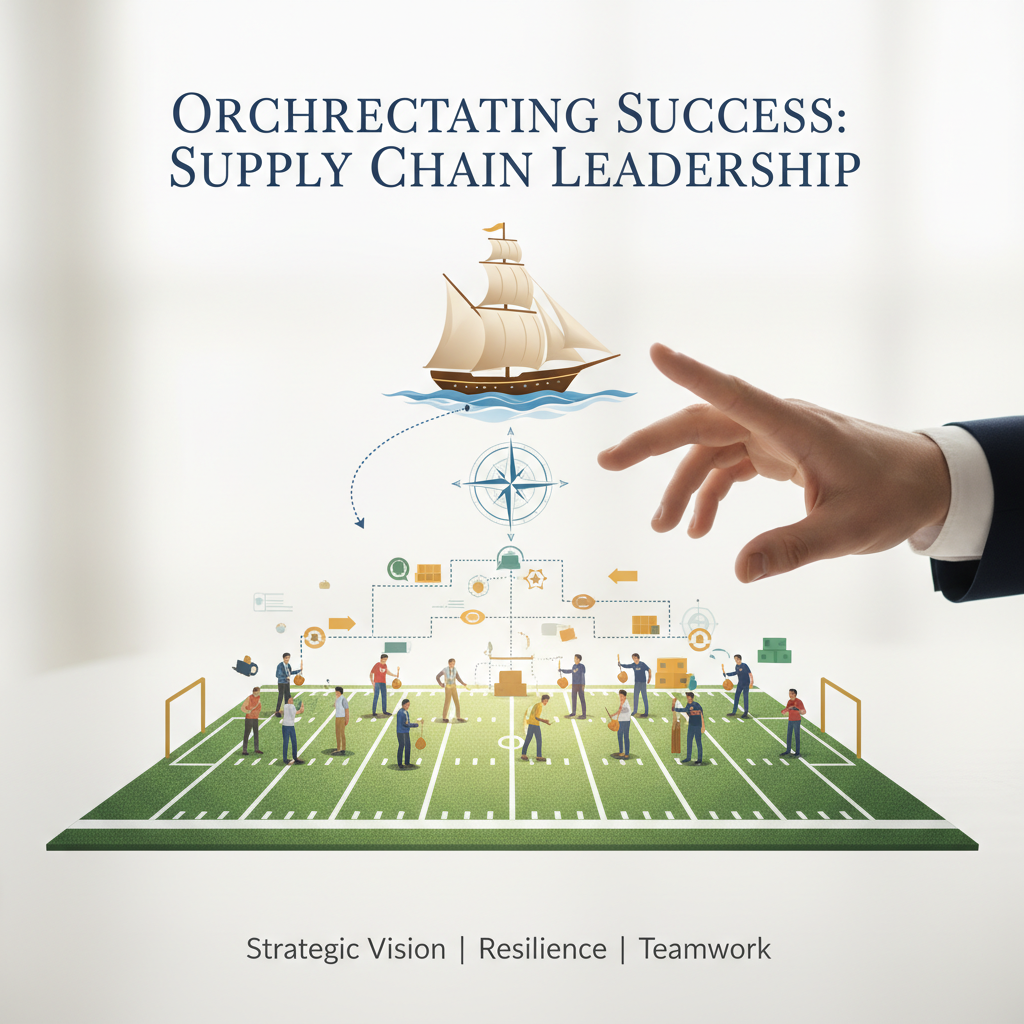
Thriving in Supply Chain: Lessons from 30+ Years in Operations Leadership
Supply chain is often misunderstood as a purely operational function. In reality, it is the strategic backbone of any organisation, connecting procurement, manufacturing, logistics, finance, and customer delivery.
Over the past 30 years leading global supply chain operations across FMCG, food processing, and speciality chemicals, I have learned that supply chain leadership is not about moving products—it is about orchestrating complex ecosystems.
1. Supply Chain Is a Strategic Leadership Function
Early in my career, working in planning and logistics roles, I saw supply chain mainly as an execution discipline. But as responsibilities grew—from demand planning to regional and global supply chain leadership—one truth became clear:
Supply chain decisions shape revenue growth, cost structure, and customer experience.
For example, during my leadership roles:
Multi-country operations required balancing inventory availability and working capital efficiency
Network design decisions influenced logistics cost, service levels, and speed to market
Collaboration with sales and finance shaped S&OP governance and business forecasting
When supply chain is aligned with leadership strategy, it becomes a growth engine rather than a cost center.
A Defining Moment: When Supply Chain Becomes Real
Most supply chain professionals remember the moment when they truly understood the impact of their work.
In your example of a delayed shipment threatening production, that moment reflects a universal lesson:
Supply chains are fragile systems that require foresight, agility, and strong relationships.
In global leadership roles, similar situations occur at a much larger scale:
Raw material disruptions
Port congestion or geopolitical disruptions
Manufacturing bottlenecks
Sudden demand spikes
Handling these requires anticipation rather than reaction.
In one transformation program, redesigning logistics networks and cost-to-serve models resulted in significant structural cost improvements and operational resilience across multi-country operations.
Moments like these reinforce why supply chain leaders must think like strategists, not just operators.
Practical Insights That Shape a Supply Chain Career
1. Continuous Learning Is Non-Negotiable
Supply chains evolve constantly.
Digital technologies, analytics, automation, and sustainability are transforming the function.
Over the years, I have seen supply chains evolve from:
Traditional logistics → ERP-driven planning → Data-driven control towers → IoT-enabled visibility.
Digital enablement and ERP-led operations now drive forecast accuracy, decision speed, and operational visibility.
Learning must therefore extend beyond logistics into:
Analytics
Digital transformation
Sustainability
Risk management
The best leaders stay curious.
2. Relationships Are the Real Supply Chain Infrastructure
Technology supports supply chains, but relationships run them.
Success often depends on:
Supplier partnerships
Logistics providers
Internal alignment between sales, finance, and operations
Strong relationships help solve problems when systems fail or disruptions occur.
For example, managing 20+ distribution centers across regions requires coordination between operations, logistics partners, and commercial teams to maintain service reliability.
The supply chain leader is therefore not just a planner—but a relationship architect.
Actionable Advice for Professionals Entering Supply Chain
Stay Curious
The industry is evolving rapidly.
Attend:
Supply chain forums
Industry conferences
Digital transformation workshops
Learning from peers and experts accelerates growth.
Build Leadership & Communication Skills
Supply chain leaders constantly negotiate between competing priorities:
Service levels vs cost
Inventory vs working capital
Speed vs efficiency
Strong communication and influence skills allow leaders to align stakeholders and drive decisions.
Leverage Technology
Modern supply chains rely on:
ERP platforms
Advanced planning systems
Supply chain analytics
IoT visibility tools
Digital visibility improves:
forecasting
inventory planning
customer service performance.
Professionals who combine operations expertise with digital capability will lead the future of supply chain.
Final Thought
If I had to summarise supply chain leadership in one sentence:
A great supply chain leader is like an orchestra conductor.
Every element—procurement, production, logistics, planning, and sales—must perform in harmony.
When that happens, organisations achieve:
operational resilience
customer satisfaction
sustainable profitability.